


Most companies treat selling as a numbers game. More calls, more emails, more pushes—and somehow, more revenue. But this approach is increasingly ineffective. Buyers are tuned out. Sales teams are burned out. And the gap between ambitious revenue targets and actual results keeps widening.
Gamification and sales offer a fundamentally different answer. Not a gimmick. Not a motivational poster campaign. A behavioral science-backed framework that rewires how customers engage with your brand and how sales teams pursue their goals.
The evidence is hard to ignore. Organizations that implement gamification in their sales strategies report up to a 25% increase in cross-selling rates in the first year alone. In the B2B sector, where most purchasing decisions still hinge on human psychology, behavioral tools like game mechanics are moving from “interesting experiment” to core sales infrastructure.
This article breaks down what gamification and sales actually mean when applied strategically, where the biggest opportunities lie across industries, what the research tells us, and how to avoid the pitfalls that derail most implementations.
What Is Gamification—and Why Does It Matter for Sales?
Gamification is the deliberate application of game-design principles—points, badges, leaderboards, challenges, progression systems—within non-game environments. In a sales context, it means designing customer and employee experiences that tap into intrinsic human motivations: the desire for achievement, status, competition, and completion.
This isn’t about making work feel like play. It’s about understanding that human decision-making is rarely rational, and that the same psychological mechanisms that make video games compelling can be engineered into buying journeys and sales processes.
Consider the status symbol effect. Apple doesn’t just sell products—it sells membership into an ecosystem. MacBook, iPhone, iPad, Apple Watch: each device reinforces the value of owning another. This is cross-selling through identity, powered by psychological principles that gamification formalizes and scales.
Most companies, however, rely almost exclusively on “push” marketing: suggesting products to customers and hoping for the best. Gamification and sales strategy shifts the equation toward “pull” marketing—giving customers a genuine incentive to explore, discover, and purchase more.
See Also: Sage Software Competitors: A Complete Guide to Choosing the Right ERP in 2026
The Psychology Behind Sales Gamification
To understand why gamification works in sales, you need to understand a few foundational principles of behavioral economics.
The Completion Instinct
Humans have a deeply wired urge to complete sets. This is sometimes called the Zeigarnik Effect—the tendency to remember and be motivated by incomplete tasks more than completed ones. Video game developers have exploited this for decades. The “hidden packages” mechanic in the Grand Theft Auto series is a textbook example: players search an entire open world for collectibles whose in-game rewards barely justify the effort. The drive isn’t the reward—it’s the completion.
Applied to sales gamification, this principle transforms a product catalog into a collection. Customers who have purchased two items from a bundle feel a measurable pull toward completing it. This is not coincidental; it’s designable.
The Status Drive
In-game purchases (IGP) have become a multi-billion-dollar industry not because they offer superior gameplay but because they offer superior status. Custom characters, exclusive cosmetics, premium avatars—players pay real money for digital items that signal achievement and identity within a community.
Research from the University of Tampere found that the desire to unlock all elements of a game is one of the top three motivations for in-game purchases. Translate this to a sales environment: customers who feel they are “leveling up” through purchases are far more likely to continue engaging, spending, and advocating for your brand.
See also: The Best ATS for Recruiting Agencies in 2026: An Expert Guide to Choosing the Right Platform
Intrinsic vs. Extrinsic Motivation
A critical distinction in gamification and sales design is the balance between extrinsic rewards (points, discounts, badges) and intrinsic motivation (sense of achievement, belonging, mastery). Over-relying on extrinsic incentives can actually suppress long-term engagement—customers who only act for the reward stop acting when the reward disappears.
Effective sales gamification creates systems where extrinsic rewards serve as on-ramps to intrinsic motivation. The badge gets them started. The sense of progress keeps them going.
How Gamification Drives Cross-Selling and Upselling
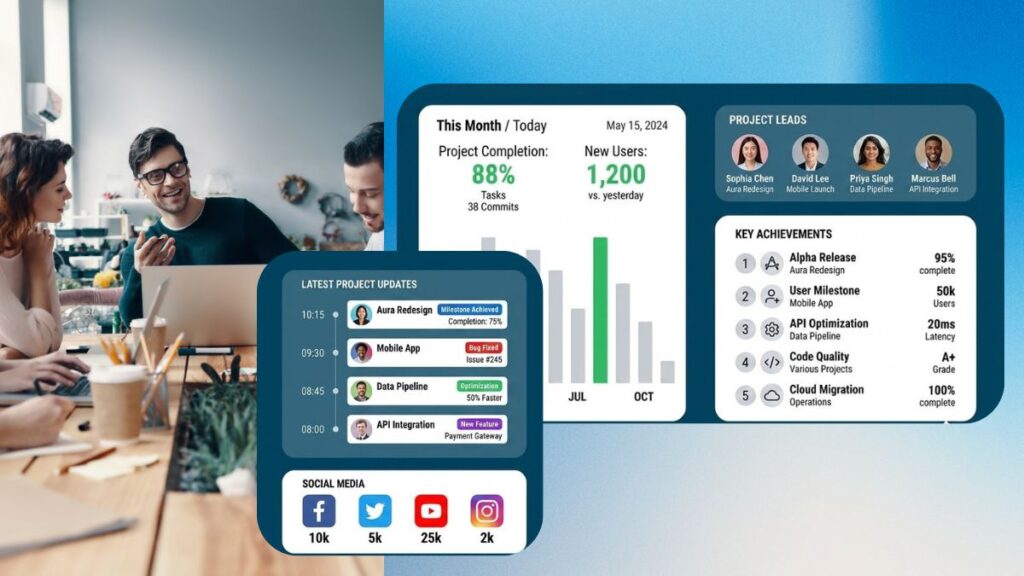
Gamification and sales intersect most powerfully in the area of cross-selling and upselling—two revenue streams that most organizations chronically underperform. Here’s how specific game mechanics can be applied:
1. Incentivized Exploration
Most customers only discover what they’re looking for. Gamification gives them a reason to look further. Progress bars that show “You’re 60% of the way to Gold status” encourage customers to explore product categories they might never have visited otherwise.
2. Reward-Based Cross-Purchases
Offering loyalty points or tiered rewards for purchasing complementary products creates a deliberate behavioral nudge. Rather than simply recommending a product, you’re making the act of exploring it feel like a smart decision rather than an upsell.
3. Themed Product Bundles
Creating curated product bundles with a narrative theme—”The Complete Home Office Setup” or “The Performance Running Kit”—turns a cross-sell into a collection challenge. Customers who resonate with the theme are significantly more likely to complete the set.
4. Personalized Gamified Recommendations
Gamified recommendation engines that adapt to individual user behavior represent one of the most powerful applications of sales gamification. By analyzing purchase history, browsing patterns, and engagement signals, these systems can surface hyper-relevant cross-sell opportunities at exactly the right moment—and frame them within a reward or progress context.
5. Limited-Time Challenges
Time-limited offers have always driven urgency. Gamification elevates this by framing the purchase within a challenge structure. “Complete your Spring Collection by Sunday and unlock exclusive member pricing” is psychologically more compelling than “Sale ends Sunday”—because it frames the customer as an active participant rather than a passive recipient.
6. Progressive Disclosure
Rather than presenting a customer with your full catalog upfront, progressive disclosure introduces complementary products and services as the customer deepens their engagement with an initial purchase. This mirrors the design logic of video game tutorials—delivering information and options at the moment they’re most relevant and actionable.
7. Interactive Demos and Trials
Gamified product experiences—trials, simulations, interactive demos—allow customers to experience the value of a complementary product before committing. Firsthand experience is one of the most reliable drivers of purchase intent, and gamification provides a structured, engaging context for delivering it.
Real-World Examples: Gamification and Sales Across Industries
Banking: The Home-Bank Model
One of the most compelling documented examples of gamification in sales comes from the banking sector. The “Home-bank Program” divides banking products into logical product areas and presents them as a unified system. Customers who use products across multiple areas receive loyalty bonuses—a direct application of the completion instinct.
The results: cross-selling rates increased by 25% in the first year. More remarkably, customers reacted positively even as checking account prices rose by up to 30%. Churn rates fell to near zero. This is the hallmark of effective sales gamification—it increases customer commitment, not just transaction volume.
See More: Web Callback: The Complete Guide to Boosting Customer Engagement and Conversion Rates
Retail and E-Commerce
Amazon’s “Frequently bought together” and tiered Prime benefits are sophisticated gamification and sales mechanics operating at scale. The recommendation engine reduces friction; the membership tier creates a status dynamic that encourages continued engagement. Customers don’t just shop on Amazon—they invest in their Amazon status.
B2B Sales: An Underutilized Frontier
Gamification is often assumed to be a B2C play. This is a mistake. Even in industrial and enterprise B2B environments—where the buyers are procurement managers, engineers, and CFOs—purchasing decisions are made by people. Human psychology doesn’t pause at the office door.
B2B applications of sales gamification include:
- Spare parts and components: Structuring replacement part recommendations as kits (rather than individual items) drives higher average order values by activating the bundle completion instinct
- Add-on digital services: Framing solution-selling as a progression toward a “complete” operational system encourages customers to expand their relationship with your product
- Partner and reseller programs: Tiered achievement systems for channel partners drive performance in ways that traditional quota models consistently fail to achieve
Do Customers Actually Value Gamification?

The short answer: yes—when it’s done well.
Research consistently shows that gamification enhances customer engagement when it is:
- Meaningful: The game elements reinforce, rather than distract from, the core value proposition
- Personalized: Gamified experiences that adapt to individual preferences feel relevant rather than generic
- Socially connected: Leaderboards, community features, and shared achievements add a layer of belonging that amplifies individual motivation
- Balanced: Rewards complement rather than replace the intrinsic value of the product or service
When customers feel that gamification is manipulative or irrelevant—when it’s points for the sake of points—it backfires. The goal is to design systems that feel like a genuine enhancement of the customer experience, not a behavioral trap.
The Internal Challenge: Getting Your Sales Team On Board
Gamification and sales transformation isn’t just a customer-facing initiative. It requires internal alignment—and this is where many rollouts fail.
Common internal challenges include:
- Sales rep resistance: Teams accustomed to traditional “push” selling may view gamified approaches as gimmicks or feel uncomfortable with the shift in methodology
- Negative associations with gamification: If introduced poorly, gamification can feel patronizing or manipulative to seasoned sales professionals
- Poor targeting: Gamified incentive systems that don’t account for customer segmentation can push reps toward low-value interactions
- Communication gaps: Sales teams that aren’t kept informed of new gamification mechanics or program updates cannot execute them effectively
The solution is to apply behavioral economics internally as well as externally. Sales teams respond to the same fundamental motivators as customers: status, achievement, progress, and belonging. Designing your internal sales gamification program with the same rigor as your customer-facing strategy is essential.
Where Sales Gamification Goes Wrong
Even with the best intentions, gamification and sales initiatives can fail. The most common failure modes:
Misalignment with Business Objectives
Gamification mechanics that are designed in isolation—without a clear line of sight to revenue or retention goals—generate activity without results. Points programs that reward the wrong behaviors (volume over value, for example) can actually damage sales performance.
Audience Mismatch
A gamification strategy designed for millennials may alienate a B2B buyer base of senior operations executives. Effective sales gamification requires deep audience understanding before a single mechanic is designed.
Complexity Overload
Poorly designed gamification systems—too many rules, too many reward tiers, too many conditions—create cognitive load that deter participation. The most effective systems are simple enough to understand immediately and deep enough to sustain engagement over time.
Over-Reliance on Extrinsic Rewards
As noted earlier, building a sales gamification program entirely around extrinsic rewards creates a fragile system. When the discount ends or the badge loses novelty, engagement collapses. The best programs use extrinsic rewards to ignite and sustain intrinsic motivation.
Failure to Test and Iterate
Sales gamification is not a “set and forget” initiative. Customer and employee behavior evolves. Mechanics that work in Q1 may underperform in Q3. Continuous A/B testing, feedback loops, and iterative design are non-negotiable components of a sustainable program.
Building a Gamification and Sales Strategy: A Framework
If you’re ready to move from theory to implementation, here is a practical framework for designing an effective gamification and sales program:
Step 1: Define Your Behavioral Objectives
What specific behaviors do you want to drive? Cross-purchases? Upsells to a premium tier? Repeat visits? The mechanics you design must be directly tied to measurable behavioral outcomes.
Step 2: Understand Your Audience
Map the psychological profiles of your target customers and sales team members. What motivates them? What do they find engaging? What would feel patronizing? Qualitative research at this stage prevents costly misalignment later.
Step 3: Design the Game Context
Create a gamified framework that feels native to your brand and product experience. This includes defining:
- Progression pathways: How do customers or reps advance?
- Reward structures: What do they earn, and when?
- Social dynamics: Is there a community, a leaderboard, a collaborative element?
- Narrative logic: Is there a story or theme that makes the experience coherent?
Step 4: Integrate with Existing Systems
Effective sales gamification doesn’t sit alongside your CRM, loyalty platform, or e-commerce system—it integrates with them. Real-time data is essential for delivering personalized, timely gamified experiences.
Step 5: Test, Measure, and Iterate
Launch with a controlled test group. Measure the behavioral outcomes you defined in Step 1. Analyze what’s working and what isn’t. Iterate. The most successful gamification and sales programs are never finished—they evolve.
The Future of Gamification in Sales
Gamification and sales are converging with three major technological trends that will define the next decade of revenue strategy:
AI-Powered Personalization
Artificial intelligence enables gamification systems to adapt in real time to individual customer behavior. Rather than a static reward structure, customers experience a dynamic gamified journey that responds to their actions, preferences, and context. This level of personalization dramatically increases the relevance and effectiveness of every mechanic.
Augmented and Virtual Reality
AR and VR create entirely new contexts for sales gamification—immersive product demos, interactive retail environments, and virtual showrooms that make the cross-selling journey genuinely entertaining. As these technologies become mainstream, the line between game and buying experience will continue to blur.
Data-Driven Behavioral Analytics
Advanced behavioral analytics platforms give organizations unprecedented visibility into how customers and sales teams respond to gamification mechanics. This transforms sales gamification from an art into a science—with the ability to predict which mechanics will drive the most engagement for specific segments.
Conclusion: Gamification Is No Longer Optional
The companies that will dominate their markets over the next decade are not those with the largest sales teams or the most aggressive push campaigns. They are the ones that understand human behavior at a fundamental level—and design their sales and gamification strategies accordingly.
Gamification and sales represent the convergence of behavioral science, technology, and commercial strategy. When implemented with rigor and creativity, game mechanics don’t just make selling more fun—they make it measurably more effective. Cross-sell rates climb. Customer loyalty deepens. Sales team performance improves. And the gap between ambition and execution narrows.
The question is no longer whether gamification belongs in your sales strategy. The question is how quickly you can implement it before your competitors do.
If your organization is ready to move beyond push marketing and build a behavioral sales strategy grounded in the science of human motivation, the first step is assessing where your current customer and sales team engagement gaps are. From there, the right gamification framework can be designed, tested, and scaled with precision.
The game has changed. The organizations that play it well will win.