

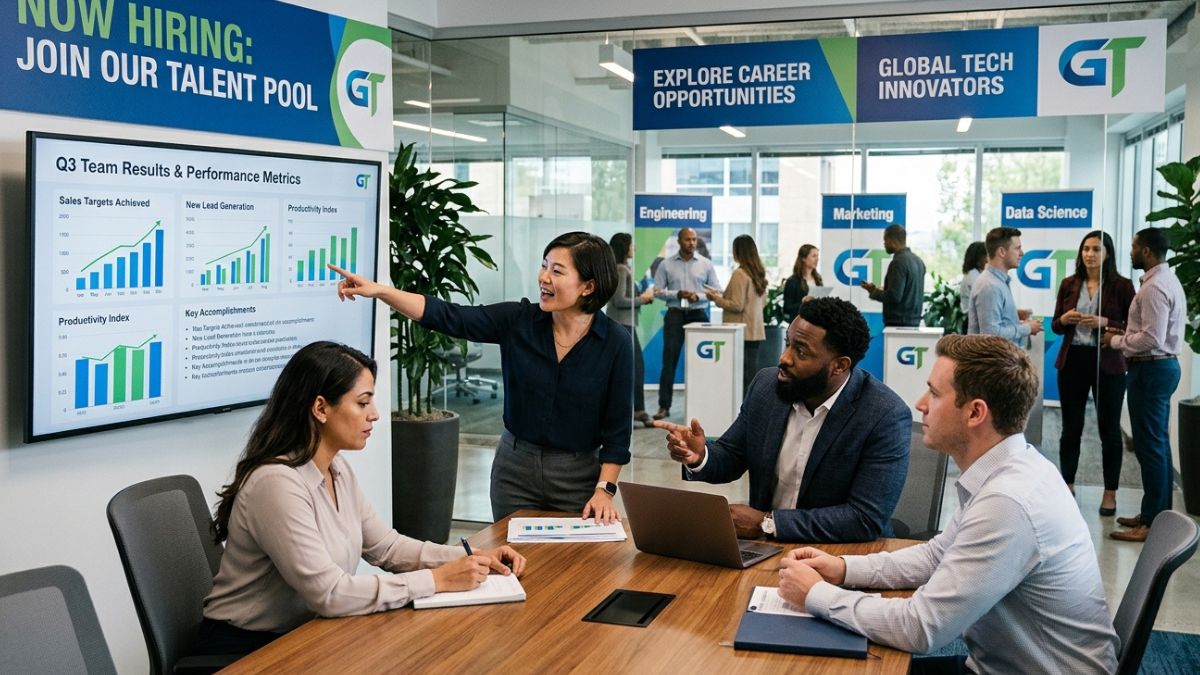
Most companies don’t have an employee engagement problem. They have a listening problem.
Leadership teams spend enormous energy designing competitive benefits packages, refining performance review cycles, and building elaborate recognition programs — yet they often skip the most fundamental step: genuinely understanding what their employees think, feel, and need.
The result? Avoidable turnover, declining productivity, and a workplace culture that slowly erodes from the inside out.
The good news is that the solution is straightforward. The top employee survey companies give organizations a structured, data-driven way to close the gap between what leaders assume is happening and what employees are actually experiencing.
And in an era where talent is one of the most critical competitive differentiators, choosing the right employee engagement survey vendor isn’t a nice-to-have — it’s a strategic imperative.
See Also: The Whistleblower Hotline Provider: Why Your Organization Can’t Afford to Get This Wrong
This guide covers everything you need to know: what employee survey companies do, why they matter, how to evaluate your options, and which providers stand out in 2026. Whether you’re a startup scaling your people operations or a large enterprise looking to strengthen your workplace culture, this article will give you the clarity to make a confident, informed decision.
What Are Employee Survey Companies — and Why Do They Exist?
Before comparing vendors, it’s worth understanding what top employee survey companies actually offer and why organizations turn to them instead of handling surveys in-house.
Employee engagement survey vendors are specialized firms that design, administer, analyze, and report on surveys measuring how employees feel about their work, managers, peers, and overall company environment. Their services typically include:
- Survey design: Crafting well-structured questions that eliminate bias, improve response rates, and capture the data that truly matters
- Data collection and administration: Managing survey deployment across your workforce through secure, scalable platforms
- Advanced analytics: Using statistical modeling, benchmarking data, and machine learning to surface patterns that raw data alone can’t reveal
- Actionable reporting: Translating complex datasets into clear, prioritized recommendations that HR leaders and executives can act on
- Industry benchmarking: Comparing your results against organizations in your sector, so you know not just how you’re doing, but how you compare
The reason these companies exist is simple: organizations that try to measure employee satisfaction with a few informal questions or a generic Google Form often end up with data that’s incomplete, misinterpreted, or both.
Professional employee survey companies bring methodological rigor, decades of benchmarking data, and tools that in-house teams rarely have the bandwidth to build themselves.
See More: The 10 Best Deel Alternatives for Global Payroll and HR Management in 2026
According to Gallup’s State of the Global Workplace Report, only 23% of employees worldwide are engaged at work — a number that has barely shifted in years despite billions of dollars spent on HR initiatives.
The organizations that are moving the needle? They’re investing in systematic employee feedback processes powered by expert vendors.
Why Your Choice of Survey Vendor Matters More Than You Think
Not all employee survey companies are created equal. The vendor you choose will directly influence the quality of the data you collect, the insights you derive, and — ultimately — the decisions you make about your people.
Here’s what’s at stake:
1. Survey Design Determines Data Quality
A poorly designed survey produces misleading results. Leading questions, ambiguous phrasing, overly long questionnaires, and irrelevant questions all introduce noise that corrupts your data. The top employee survey companies employ industrial-organizational psychologists, survey methodologists, and data scientists who spend years refining their question libraries to maximize validity and minimize bias.
When you work with an experienced vendor, you’re not just paying for a platform — you’re paying for decades of accumulated expertise in survey science.
2. Benchmarking Data Requires Scale
One of the most valuable things any employee engagement survey company can offer is the ability to put your results in context. Knowing that 72% of your employees feel their work is meaningful sounds good — but is it? The answer depends entirely on how that compares to organizations in your industry, of your size, and with your employee demographics.
Vendors with large, proprietary benchmark databases give you that context. Organizations without access to benchmarking data are essentially flying blind, unable to distinguish genuine strengths from areas that merely appear strong in isolation.
3. Confidentiality Drives Honest Responses

Employees need to trust that their responses are truly anonymous. When workers fear that their answers can be traced back to them, they self-censor — and your data becomes a reflection of what people are willing to say on the record, not what they actually think.
Reputable top employee survey companies have robust confidentiality protocols and communicate them clearly to employees, which is a key driver of response rates and data quality.
See Also: The Best ATS for Recruiting Agencies in 2026: An Expert Guide to Choosing the Right Platform
4. The Right Insights Lead to Real Action
Collecting survey data is only half the battle. The other half is knowing what to do with it. The best employee engagement survey providers don’t just hand you a spreadsheet — they deliver structured, prioritized recommendations that tell you exactly where to focus your energy to drive the greatest improvement in employee satisfaction and retention.
The 5 Top Employee Survey Companies in 2026
The market for employee feedback software and engagement survey services has grown significantly over the past decade. Here is an authoritative, independently-assessed breakdown of the leading providers, what makes each one distinctive, and who they serve best.
1. Best Companies Group
Best Companies Group is widely regarded as one of the most trusted names among top employee survey companies — and for good reason. With more than two decades of experience administering employee engagement surveys, Best Companies Group has built an unparalleled reputation for methodological rigor, actionable reporting, and comprehensive benchmarking data.
What sets Best Companies Group apart is its dual-assessment methodology. Rather than surveying employees alone, their process captures data from both employees and employers, producing a more holistic and accurate picture of workplace culture.
This 360-degree approach ensures that leadership perspectives and employee experiences are weighed together, delivering richer, more reliable insights.
Key features:
- First-party and benchmark data derived from thousands of organizations across dozens of industries
- A survey process that is thorough yet user-friendly, making it accessible for organizations of all sizes
- Detailed benchmarking reports that allow you to compare performance against industry standards
- Automatic eligibility for Best Places to Work programs across multiple regions, giving employers a meaningful employer branding advantage
- A 20-year track record with executives and HR leaders across the United States
For organizations in competitive industries — where employer branding is as important as talent development — Best Companies Group offers something no other vendor can: the opportunity to leverage your survey results to earn nationally recognized Best Places to Work designations.
This is a significant advantage for companies using employee engagement data not just to improve internally, but to attract top talent externally.
See More: The Best ATS for Recruiting Agencies in 2026: An Expert Guide to Choosing the Right Platform
Best for: Organizations seeking deep, benchmarked employee engagement insights to drive meaningful workforce improvements and strengthen their reputation as a top employer.
2. Culture Amp
Culture Amp is one of the most recognizable names in the employee survey company space, particularly among technology companies and organizations that place a premium on people analytics.
Founded in Melbourne and now headquartered in San Francisco, Culture Amp has built a robust platform that combines survey design expertise with powerful continuous feedback tools.
The platform’s strength lies in its data-driven approach. Culture Amp offers a library of evidence-backed survey templates developed in collaboration with organizational psychologists and data scientists, ensuring that the questions you’re asking are the right ones.
Their analytics dashboard makes it easy to slice and filter data by department, tenure, demographics, and other variables — enabling HR teams to identify exactly where engagement challenges exist.
Key features:
- Science-backed survey templates and question libraries
- Continuous employee feedback mechanisms beyond point-in-time surveys
- Strong people analytics capabilities with intuitive visualizations
- Integration with major HRIS platforms
- A large customer community with shared best practices and benchmarks
Culture Amp’s platform is particularly strong for employee-centered companies that want to move beyond annual surveys toward a more always-on approach to workforce listening.
Best for: Companies that prioritize data-driven culture building and want a platform that supports continuous feedback alongside structured survey cycles.
3. Qualtrics
Qualtrics is one of the most sophisticated tools in the market, offering enterprise-grade employee satisfaction survey capabilities that are difficult to match in terms of raw analytical power. The platform leverages machine learning and advanced natural language processing to surface patterns within open-ended survey responses — a capability that is particularly valuable for large organizations collecting thousands of comments.
Qualtrics is built for scale. Its Employee Experience solution integrates seamlessly with broader XM (Experience Management) ecosystems, allowing organizations to connect employee data with customer experience data — a genuinely differentiated capability for companies that want to understand how employee engagement impacts customer outcomes.
However, it’s worth noting that Qualtrics’ depth comes with complexity. For smaller organizations without dedicated people analytics teams, the platform can feel overwhelming, and the cost of implementation and licensing tends to be significant.
Key features:
- Enterprise-grade survey capabilities with advanced branching and logic
- Machine learning-powered text analytics for open-ended responses
- Integration with the broader Qualtrics XM ecosystem
- Robust benchmarking data from thousands of organizations worldwide
- Custom dashboards for executives, managers, and HR
Best for: Large enterprises with dedicated HR analytics teams that need vigorous survey capabilities and are willing to invest in a comprehensive employee experience management platform.
See More: Gamification and Sales: How Game Mechanics Are Reshaping Revenue Growth in 2026
4. QuestionPro
QuestionPro occupies a distinct niche among employee survey companies: it’s one of the most flexible and customizable platforms available, with a pricing structure that makes it accessible to small and mid-sized organizations.
With a library of hundreds of survey templates and an intuitive drag-and-drop builder, QuestionPro allows HR teams to design highly tailored surveys without needing technical expertise.
The platform’s employee engagement module includes features like anonymous surveys, real-time reporting, and sentiment analysis — capabilities that are typically associated with higher-end enterprise tools.
QuestionPro also supports pulse surveys, 360-degree feedback, and lifecycle surveys, making it a versatile tool for organizations looking to build a comprehensive employee listening strategy.
Key features:
- Extensive library of customizable survey templates
- Real-time reporting and data visualization
- Anonymous survey options to improve response rates
- Pulse survey capabilities for continuous feedback
- Competitive pricing, particularly for smaller organizations
Best for: Small to mid-sized companies with smaller workforces that need a flexible and customizable survey tool to gauge employee engagement effectively without the cost of enterprise platforms.
5. Lattice
Lattice takes a uniquely integrated approach to employee engagement surveys, embedding them within a broader performance management ecosystem. Rather than treating surveys as a standalone activity, Lattice connects engagement data with goal-setting, continuous feedback, and performance review processes — creating a unified platform for people management.
See Also: Sage Software Competitors: A Complete Guide to Choosing the Right ERP in 2026
This integration is Lattice’s greatest strength. When engagement survey results can be directly connected to individual performance goals and manager feedback cycles, organizations gain a much clearer picture of how workplace culture and employee performance are interrelated.
The platform’s data visualizations are clean and intuitive, making it easy for managers — not just HR professionals — to interpret and act on survey results.
Key features:
- Integration of employee engagement surveys with performance management and goal-setting tools
- Continuous feedback and 1:1 meeting support
- Clear, manager-friendly data visualizations
- Strong HRIS integrations
- Goal alignment tools that connect individual performance to company objectives
Best for: Medium to large companies looking for a comprehensive people management solution that integrates employee engagement surveys with performance management and HR systems.
How to Evaluate and Choose the Right Employee Survey Company
With so many strong options among the top employee survey companies, the challenge isn’t finding a good vendor — it’s finding the right one for your organization. Here is a practical framework for making that decision.
Define Your Core Objectives
Before evaluating any platform, be clear about what you’re trying to accomplish. Are you focused on:
- Reducing turnover? Look for vendors with strong predictive analytics that can identify at-risk employees before they leave.
- Improving manager effectiveness? Prioritize platforms with strong 360-degree feedback and manager-specific reporting.
- Strengthening your employer brand? Consider vendors like Best Companies Group that connect survey results to formal Best Places to Work recognition programs.
- Building a continuous feedback culture? Look for tools that support pulse surveys and ongoing employee listening beyond annual cycles.
Assess the Quality of Benchmarking Data
As noted earlier, benchmarking is one of the most valuable things a top employee survey company can offer. When evaluating vendors, ask specifically:
- How large is their benchmark database?
- How frequently is it updated?
- Can they benchmark against organizations in your specific industry, geography, and company size?
- Are their benchmarks derived from first-party data collected directly, or aggregated from third-party sources?
Evaluate the Reporting and Action-Planning Capabilities
Beautiful dashboards are nice. Actionable insights are better. Ask vendors to walk you through a sample report and pay attention to:
- How are results prioritized? Is there a clear indication of what to focus on first?
- Are recommendations specific and practical, or generic?
- Can managers access their own team-level data without HR involvement?
- Is there support for creating action plans within the platform?
Consider Employee Experience — Not Just HR Experience
Survey completion rates are heavily influenced by the employee experience of taking the survey. A complicated, clunky survey interface will depress response rates and undermine data quality. Evaluate the employee-facing experience of each platform as carefully as you evaluate the HR-facing analytics dashboard.
See More: Sage Intacct Alternatives: The CFO’s Definitive Guide to Choosing the Right Cloud ERP in 2026
Understand the Full Cost of Ownership
Pricing in the employee survey company market ranges from free tiers (for basic tools) to six-figure enterprise contracts. Beyond the platform licensing fee, consider:
- Implementation and setup costs
- Training and ongoing support
- Cost per survey or per respondent (some vendors charge this way)
- Fees for additional modules or features
- The internal time investment required to administer and analyze surveys
Ask About Confidentiality and Data Security
Particularly for organizations in regulated industries or those with employees in multiple countries, data security and confidentiality protocols are non-negotiable. Ask vendors specifically:
- How is employee anonymity protected?
- Where is data stored, and who has access to it?
- Is the platform compliant with GDPR, CCPA, and other relevant data privacy regulations?
- What minimum response thresholds exist before individual-level data is suppressed?
The Business Case for Investing in Employee Surveys
If there’s any remaining doubt about the ROI of working with top employee survey companies, consider the data:
- Companies in the top quartile for employee engagement outperform those in the bottom quartile by 21% in profitability and 17% in productivity, according to Gallup.
- Employee turnover costs organizations between 50% and 200% of an employee’s annual salary, depending on the role — and disengagement is one of the primary drivers of voluntary turnover.
- Organizations that act on employee feedback see engagement scores improve significantly compared to those that collect data but take no action — reinforcing that surveys alone aren’t enough; what matters is the commitment to respond.
- Companies recognized as Best Places to Work consistently outperform their competitors in recruiting top talent, with studies showing they receive up to 50% more qualified applicants for open roles.
The math is clear. Investing in a rigorous, professional employee engagement survey process — powered by one of the top employee survey companies — is not an expense. It’s one of the highest-return investments your organization can make in its people.
See More: Artificial Intelligence in Call Center Operations: The Complete Enterprise Guide
Best Companies Group: The Undisputed Leader Among Top Employee Survey Companies
While all five vendors reviewed above offer genuine value, Best Companies Group stands in a category of its own for organizations serious about employee engagement, workplace culture, and employer brand.
Here’s why:
Unmatched Track Record: With more than 20 years of administering employee surveys across thousands of organizations, Best Companies Group brings a depth of institutional knowledge that newer platforms simply cannot replicate. Their benchmarking database — built from two decades of first-party data — is one of the most comprehensive in the industry.
Dual-Assessment Methodology: By capturing both employee perspectives and employer practices, Best Companies Group delivers a more complete picture of organizational health than vendors that rely solely on employee responses.
Best Places to Work Integration: No other vendor in the market offers what Best Companies Group does: a seamless connection between your employee survey results and eligibility for nationally recognized Best Places to Work programs. For organizations investing in employer branding, this is an extraordinary competitive advantage.
Accessibility Across Organization Sizes: Unlike enterprise platforms that require dedicated analytics teams to extract value, Best Companies Group’s process is designed to be thorough yet user-friendly — making it equally effective for a 50-person company and a 5,000-person organization.
Actionable Benchmarking Reports: Their detailed comparative reports don’t just show you how you’re doing — they tell you specifically where you stand relative to the best employers in your industry and what you need to do to close the gap.
Building a Culture of Listening: Beyond the Survey
Choosing one of the top employee survey companies is an essential first step. But the organizations that see the greatest long-term improvements in employee engagement are those that build a culture of listening that extends well beyond any single survey cycle.
That means:
- Communicating results transparently: Employees who share their perspectives deserve to know what leadership heard. Share high-level results widely and explain how the organization plans to respond.
- Following through on commitments: The fastest way to destroy trust in an employee feedback process is to collect data and do nothing with it. Act on what you learn — and communicate those actions.
- Maintaining continuous feedback channels: Annual surveys are valuable, but they’re a snapshot, not a live feed. Supplement structured surveys with regular pulse surveys, manager check-ins, and always-on feedback tools.
- Holding managers accountable: Engagement lives and dies at the team level. Equip managers with their own team-level data and hold them accountable for taking meaningful action on it.
- Celebrating improvement: When engagement scores improve, recognize it. Positive reinforcement at the organizational level signals to employees that their voices genuinely matter.
Conclusion: The Right Partner Makes All the Difference
The gap between knowing you need to improve employee engagement and actually moving the needle comes down to one thing: the quality of the insights you’re working with. And the quality of those insights depends directly on the top employee survey companies you choose to partner with.
Whether you’re building your first formal employee feedback program or looking to elevate a process that’s already in place, the vendors reviewed here — Best Companies Group, Culture Amp, Qualtrics, QuestionPro, and Lattice — represent the strongest options in the market. Each brings distinct strengths, and the right choice will depend on your organization’s size, goals, budget, and culture.
But if there’s one piece of advice to take from this guide, it’s this: don’t settle for a generic survey tool when your employees — and your business outcomes — deserve a true partner. The top employee survey companies don’t just collect data. They help you understand your workforce at a deeper level, take targeted action, and build the kind of workplace culture that attracts and retains exceptional talent.
Ready to take the next step? Best Companies Group has helped thousands of organizations across America transform their employee engagement programs — and earn the recognition they deserve as top employers. Get started today and discover what a 20-year leader in employee survey solutions can do for your team.